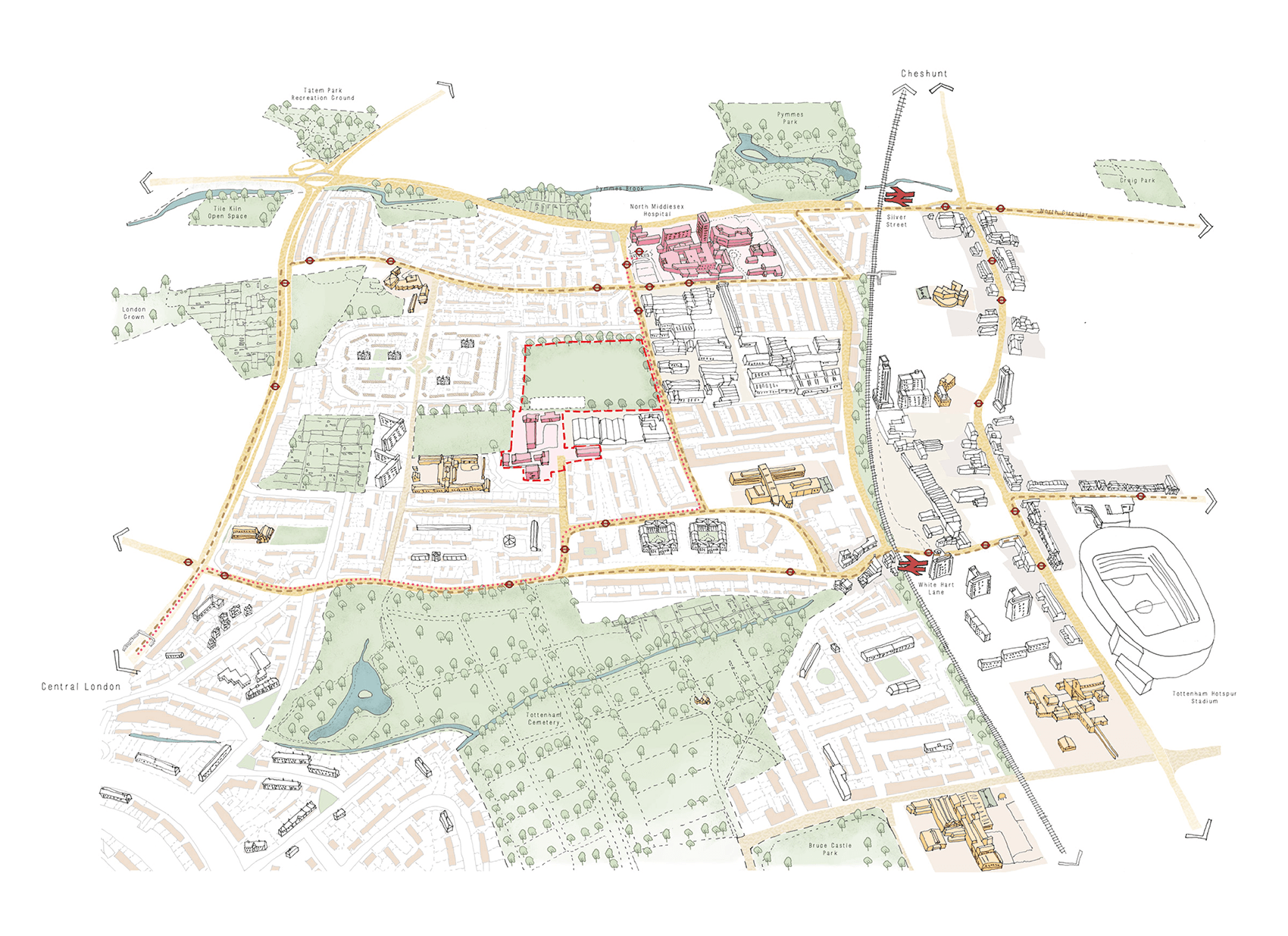
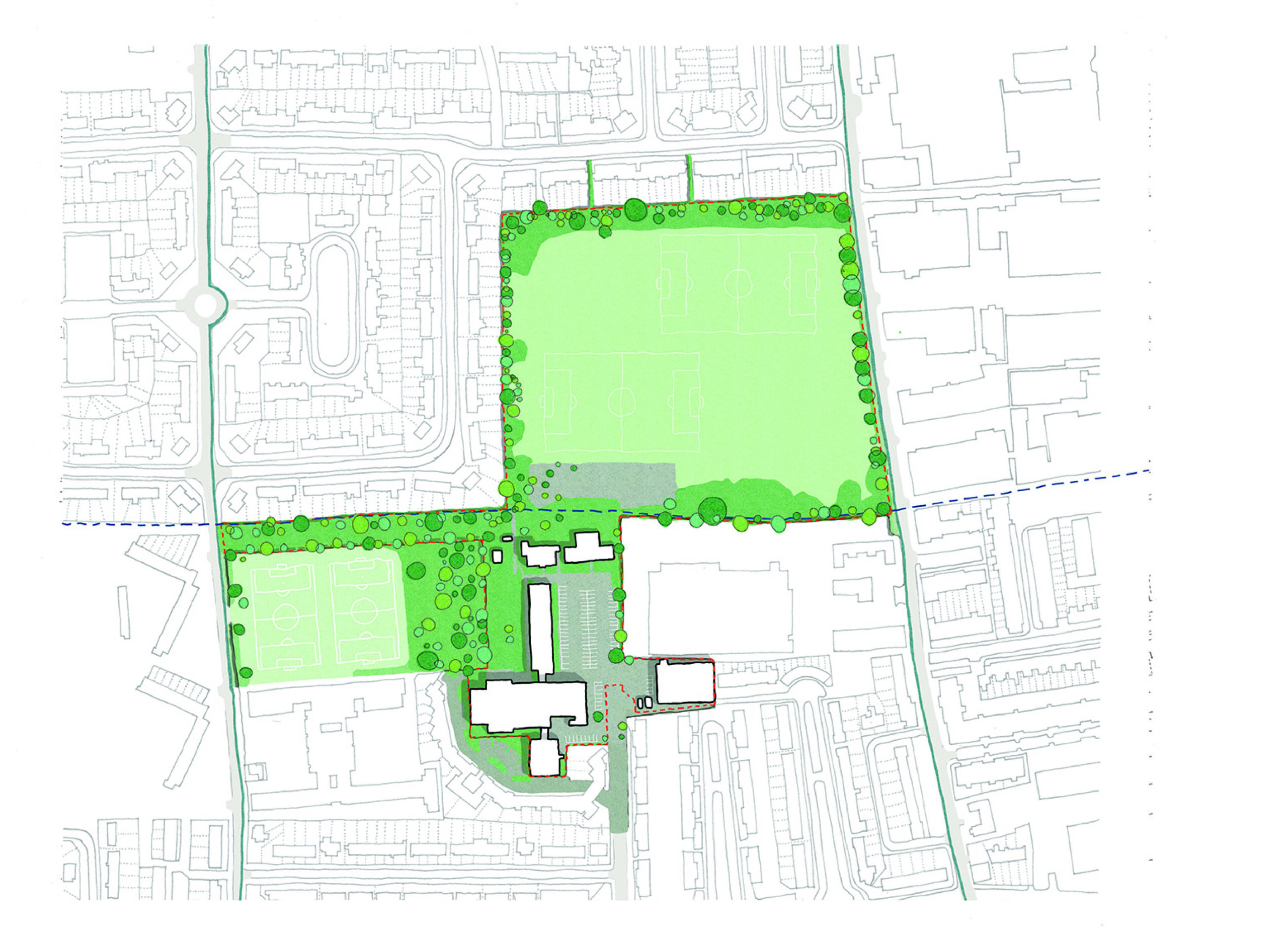
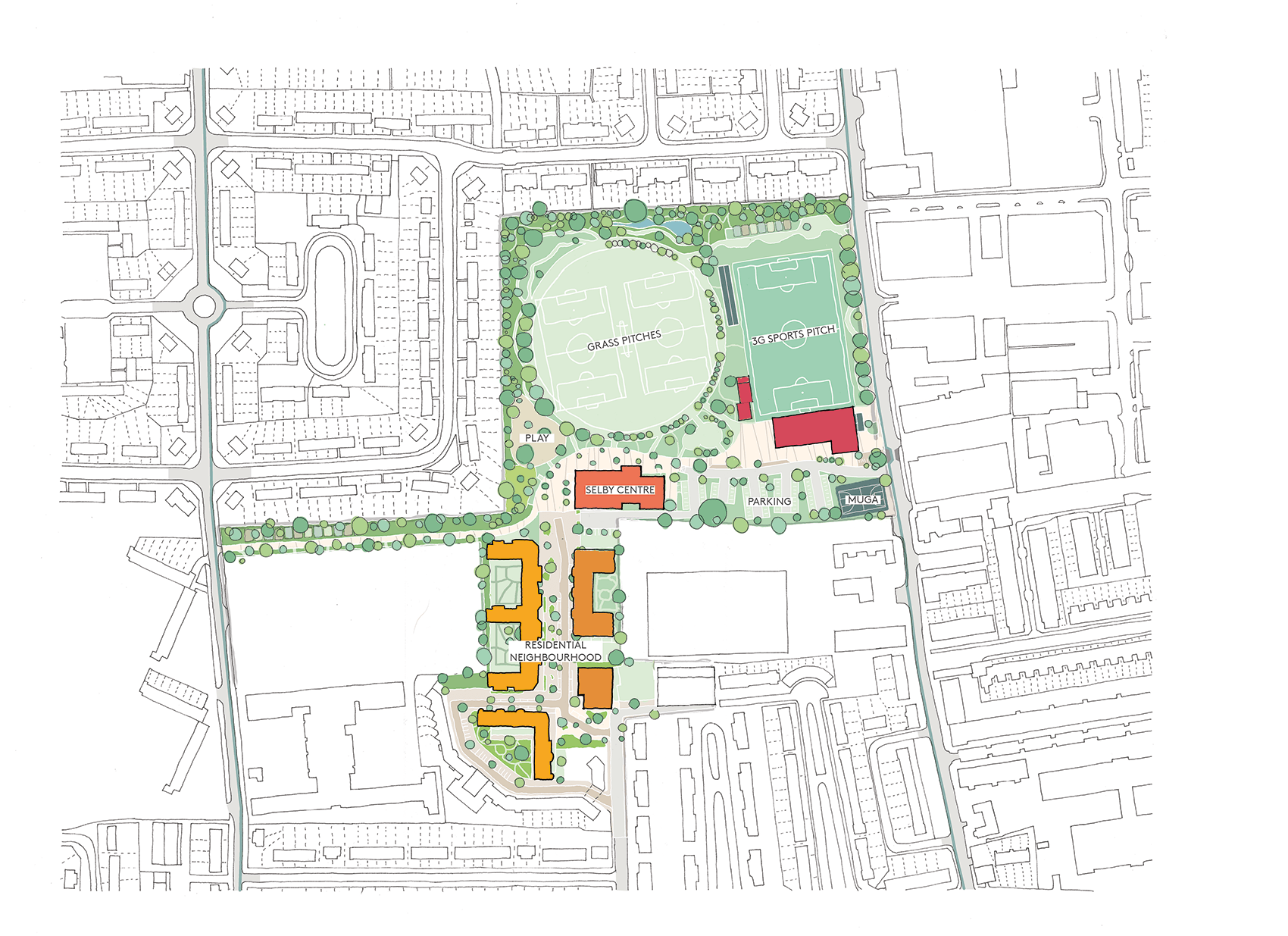
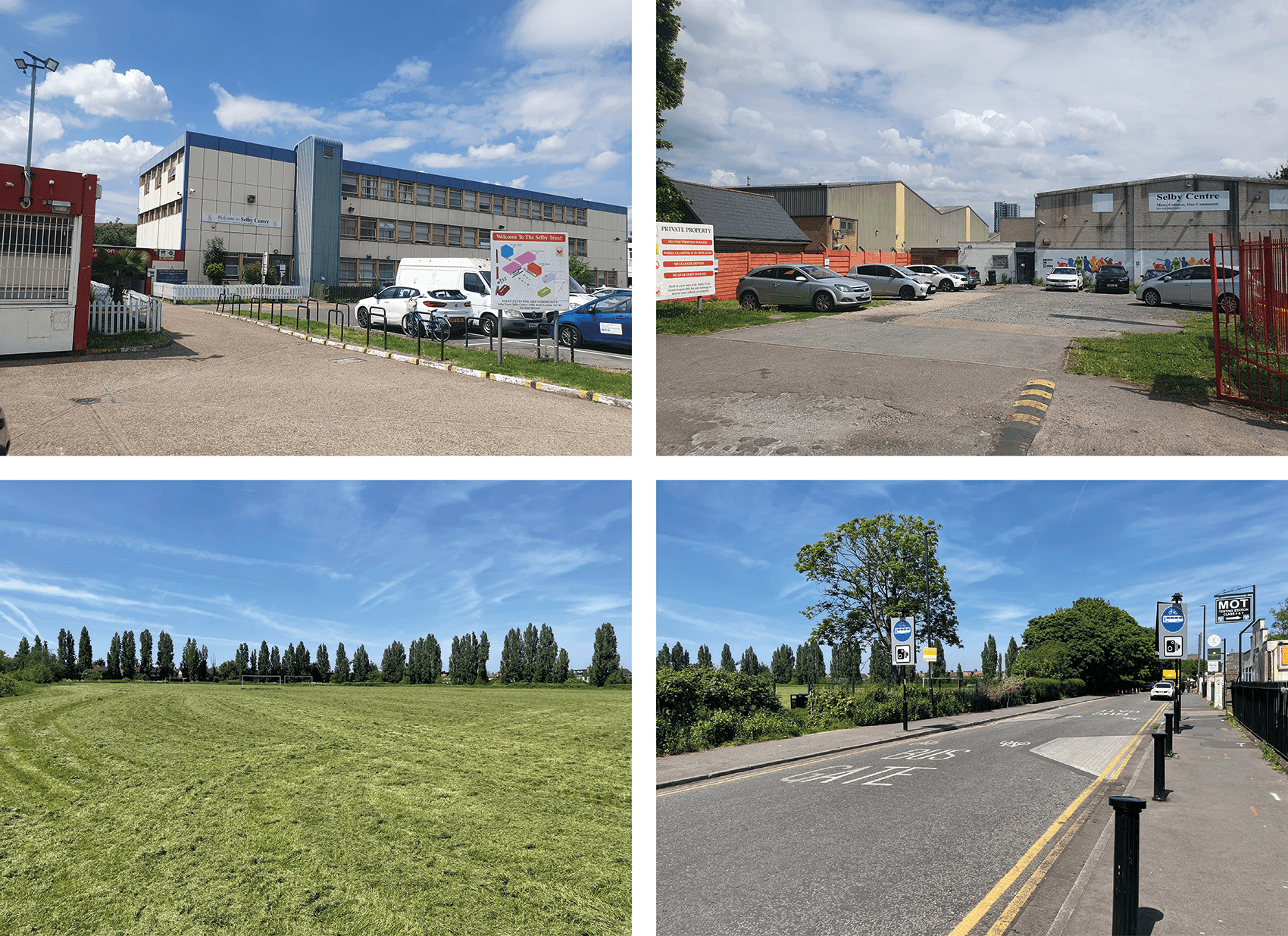
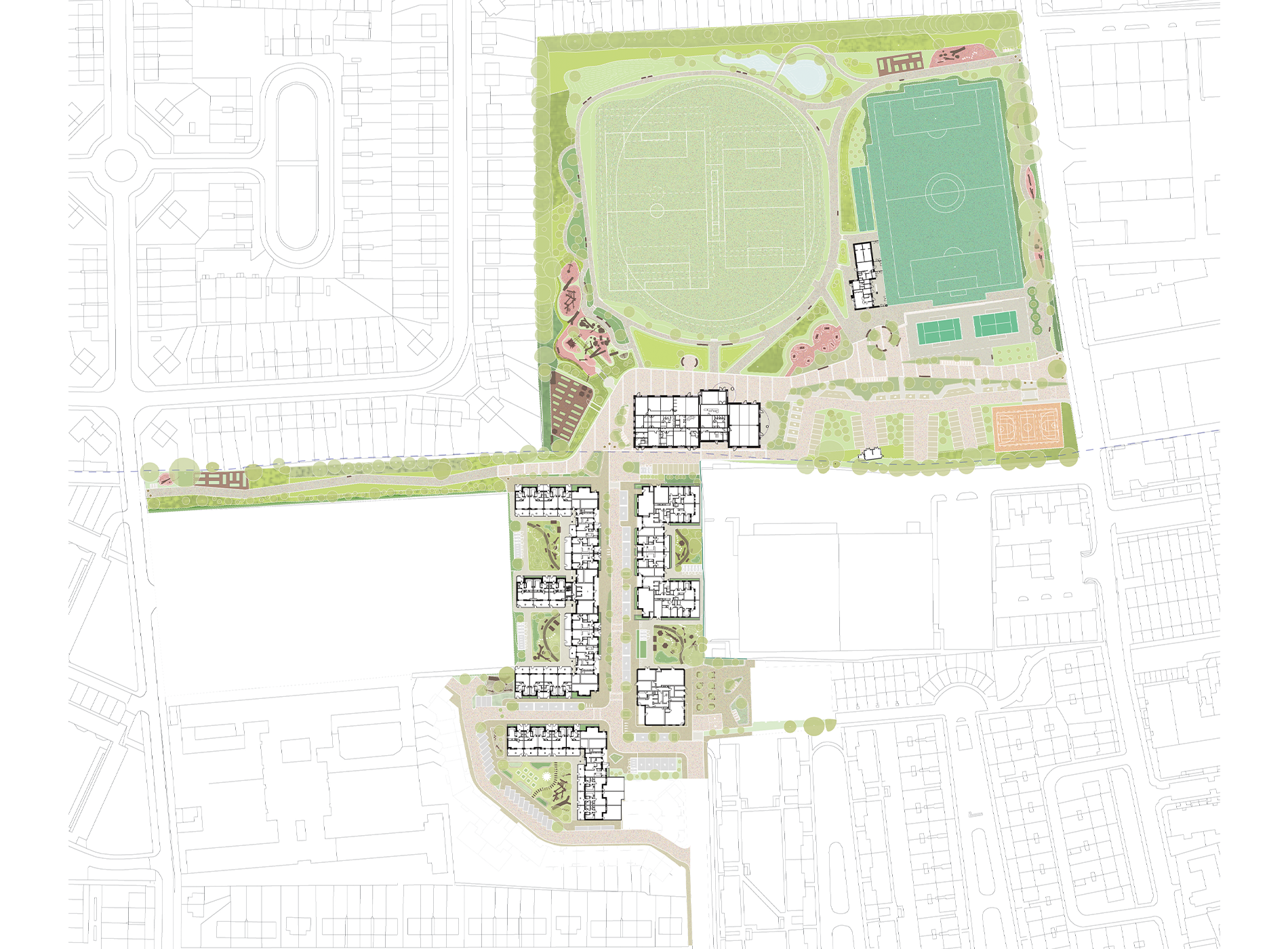
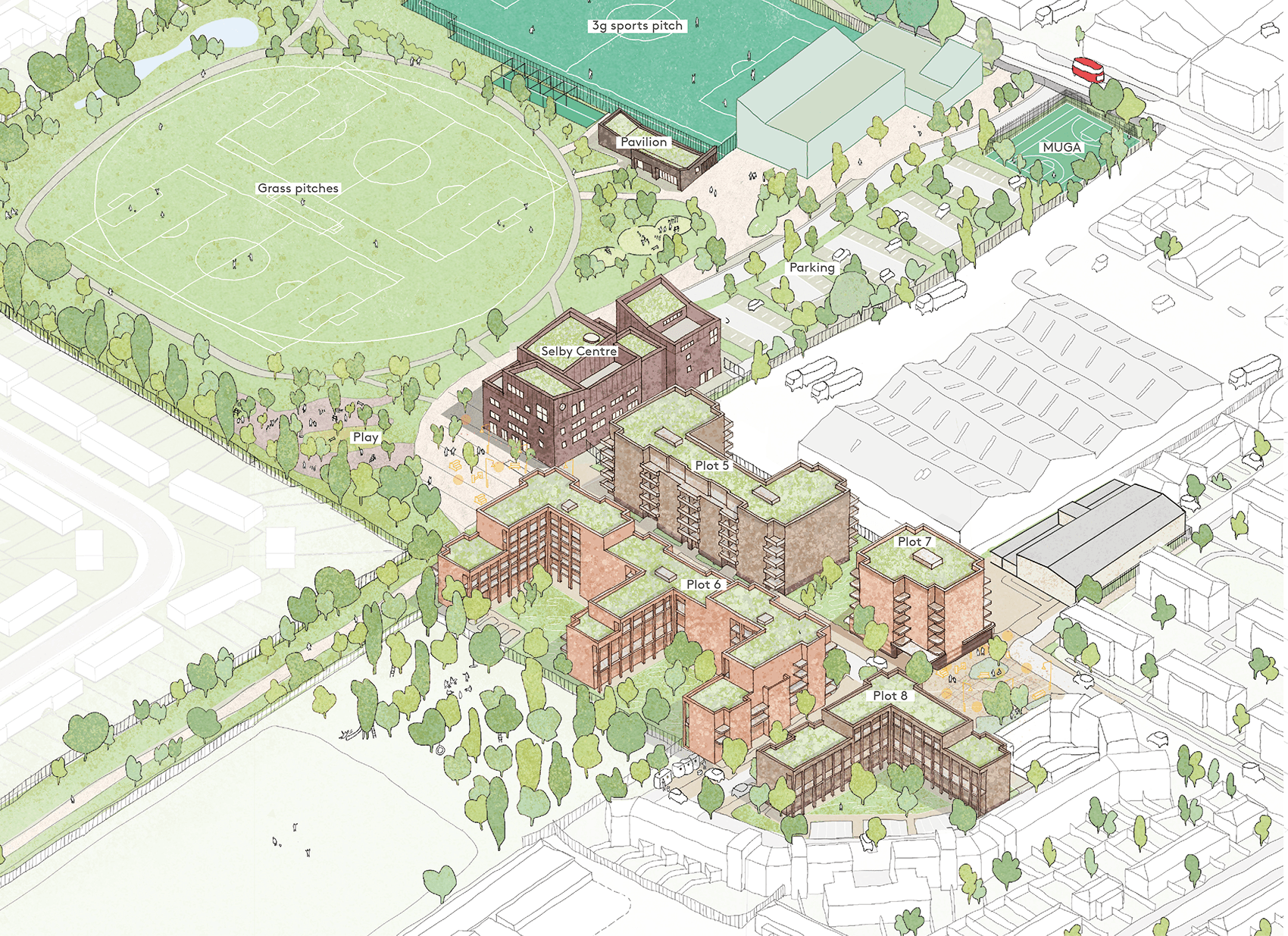
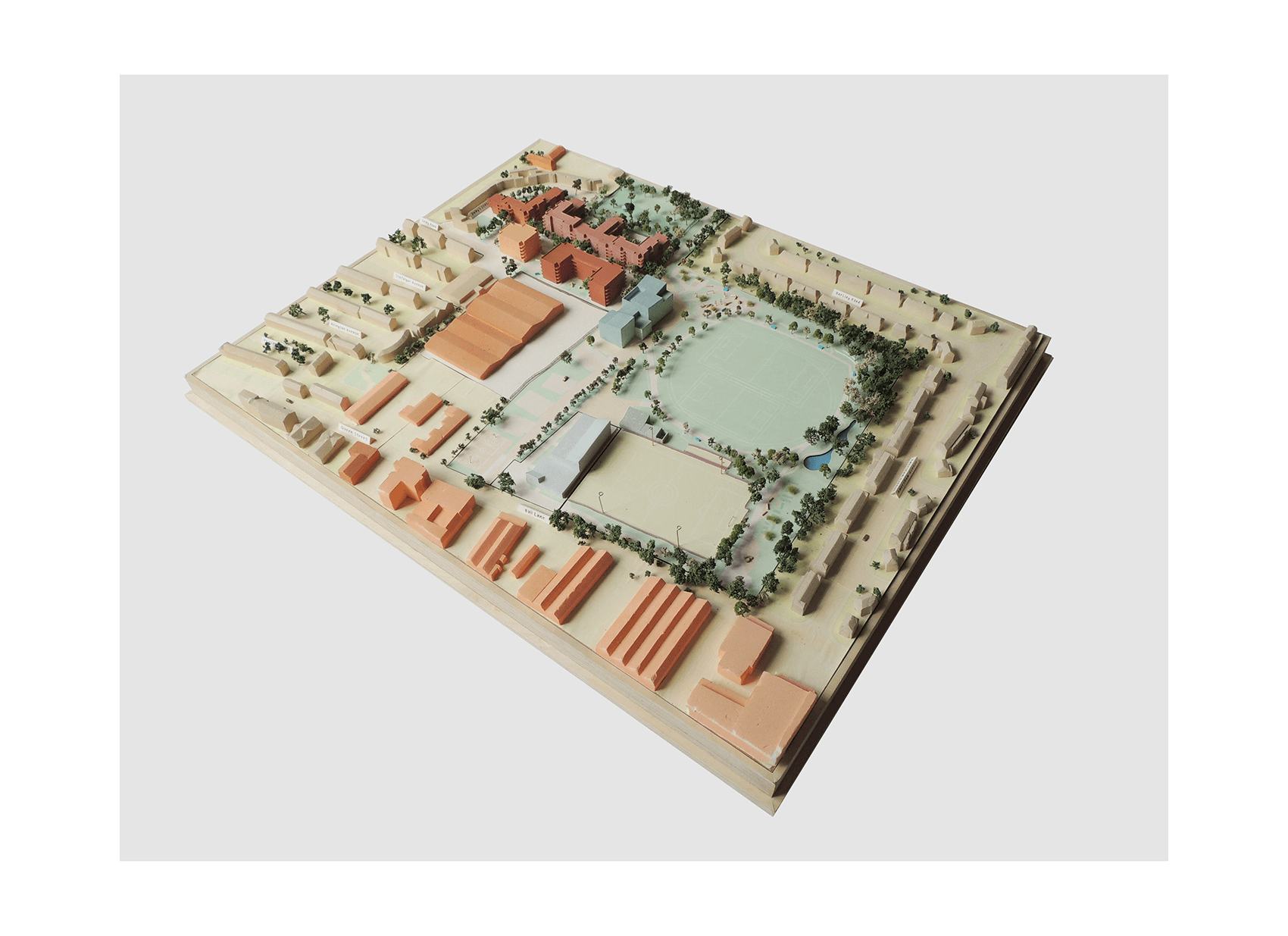
Located at the intersection of two London boroughs, Selby Urban Village re-envisions a disused secondary school and underutilised playing fields in North London into a dynamic mixed-use neighbourhood of approximately 202 homes, with new streets, revived open spaces and the re-provision of much-loved community sports facilities.
At the heart of the masterplan is the Selby Centre, an important civic space that has long played a significant role in shaping local identity. For more than three decades it has provided a home for local businesses, organisations and residents to come together to share, learn and participate. Currently housed in a former school and a collection of worn-out buildings at the back of an industrial area, the centre is no longer fit for purpose.
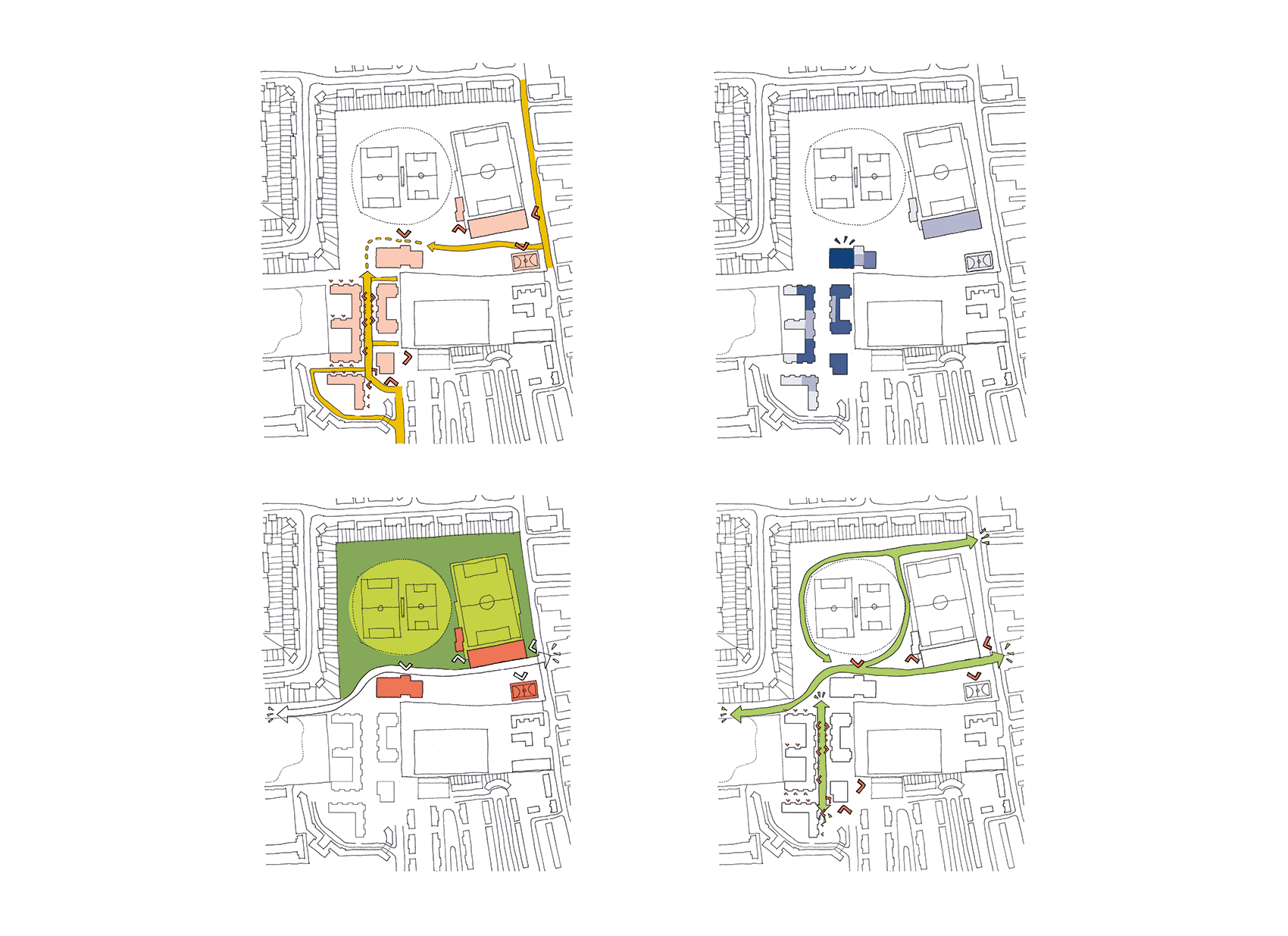
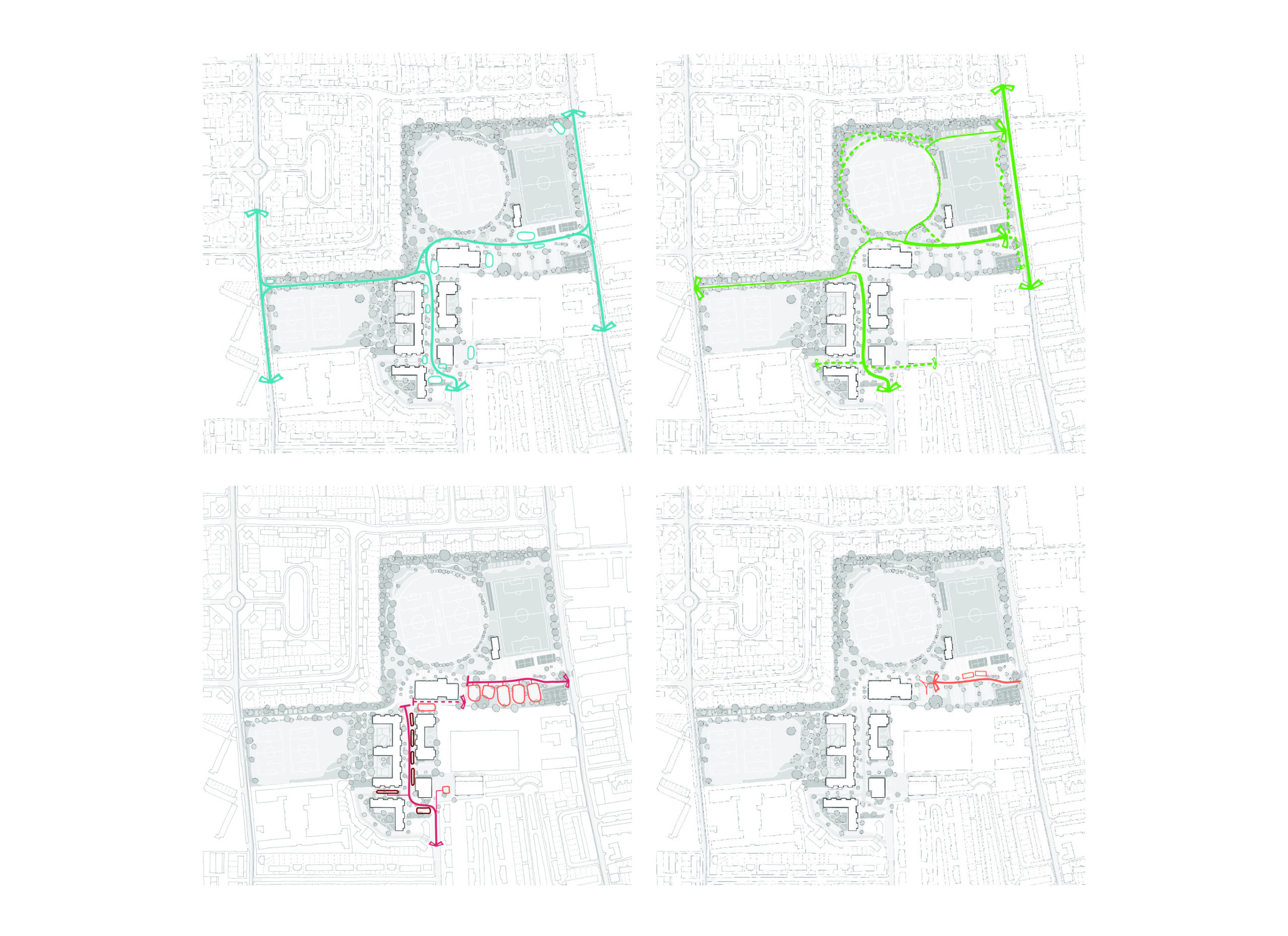
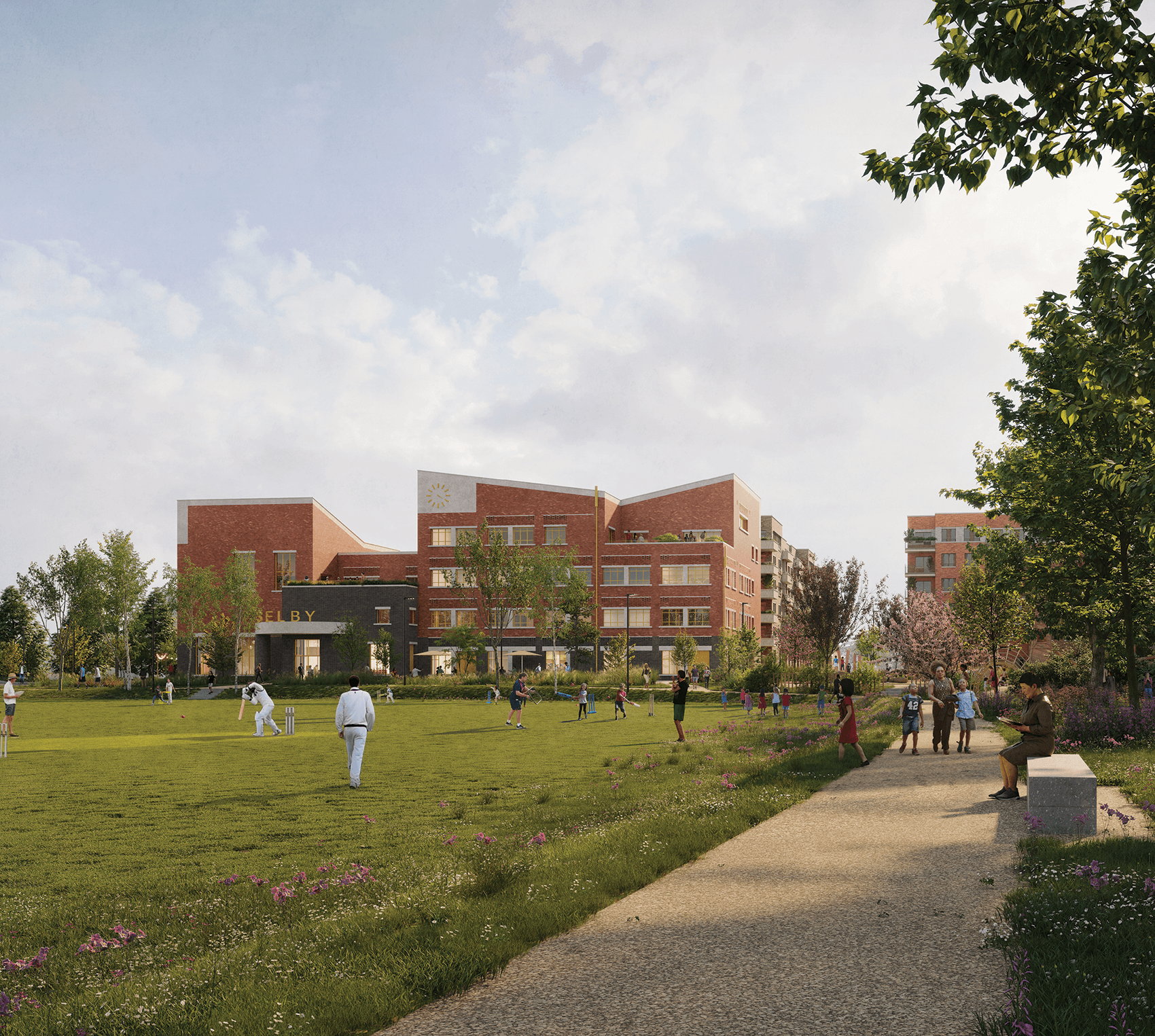
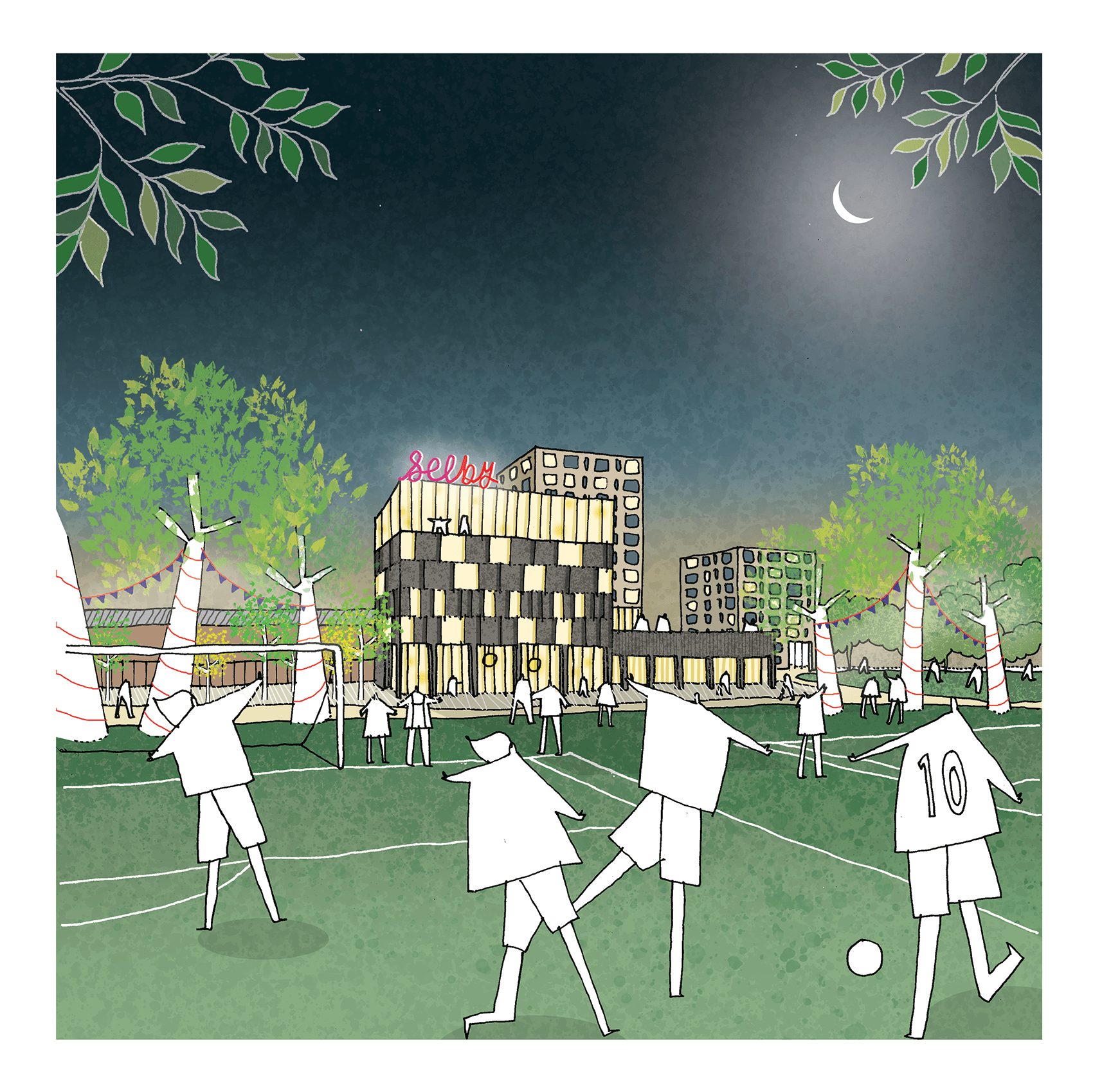
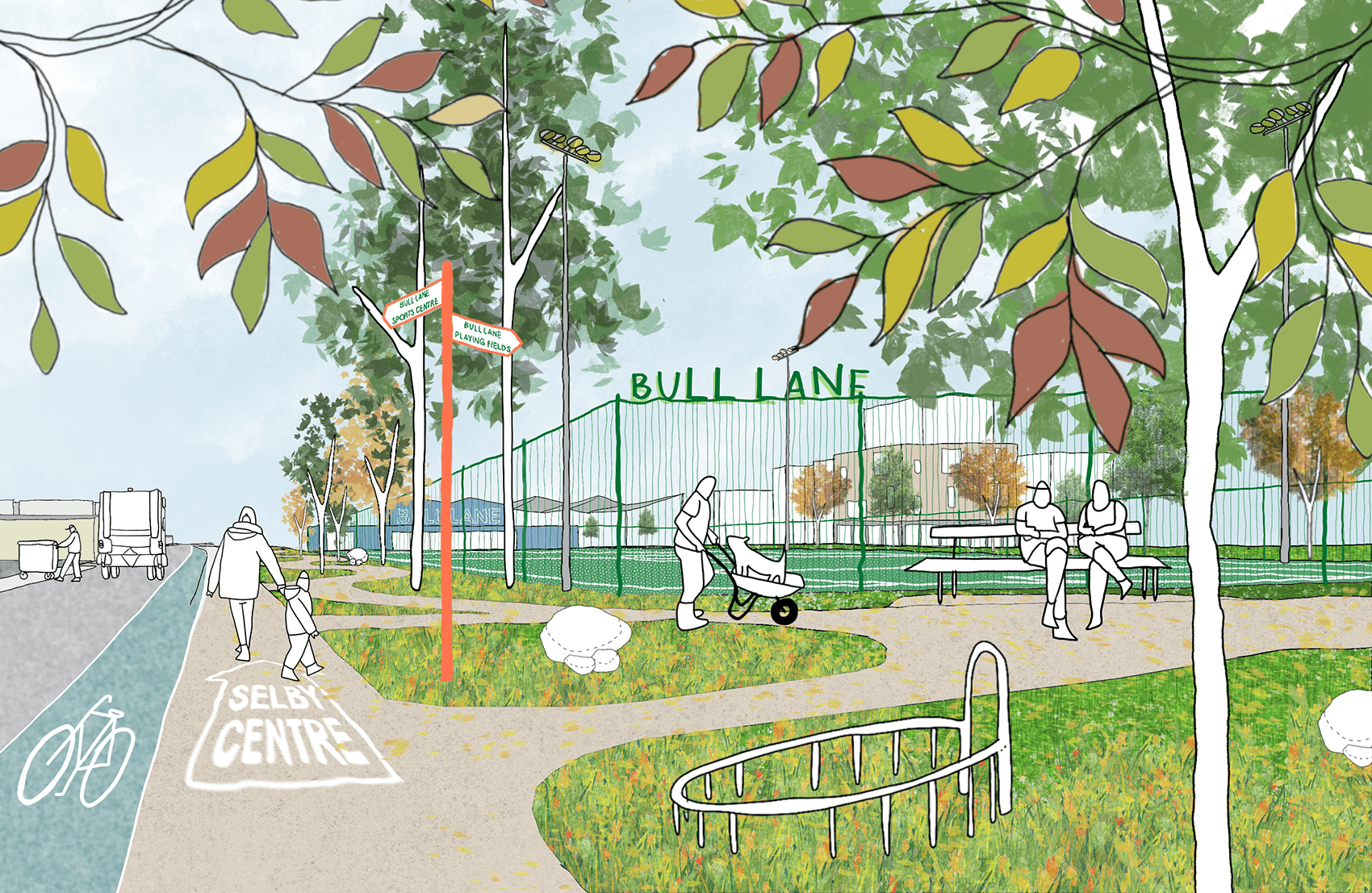
Its ethos as a working social and enterprise hub is conceived as a “factory for community activity”. The new Selby Centre will provide generous, flexible space for a diverse programme of uses including sports and exercise, enterprise, childcare, social events, education and play. Located alongside Bull Lane Playing Fields, the new centre enables activity to spill out into the landscape and allows people to reclaim this important urban green space, which has long been physically disconnected from nearby homes. To break down these barriers, ecological areas and community planting will animate the edges of the fields, while new pedestrian and cycling routes draw people into the park and connect it to the neighbourhood.
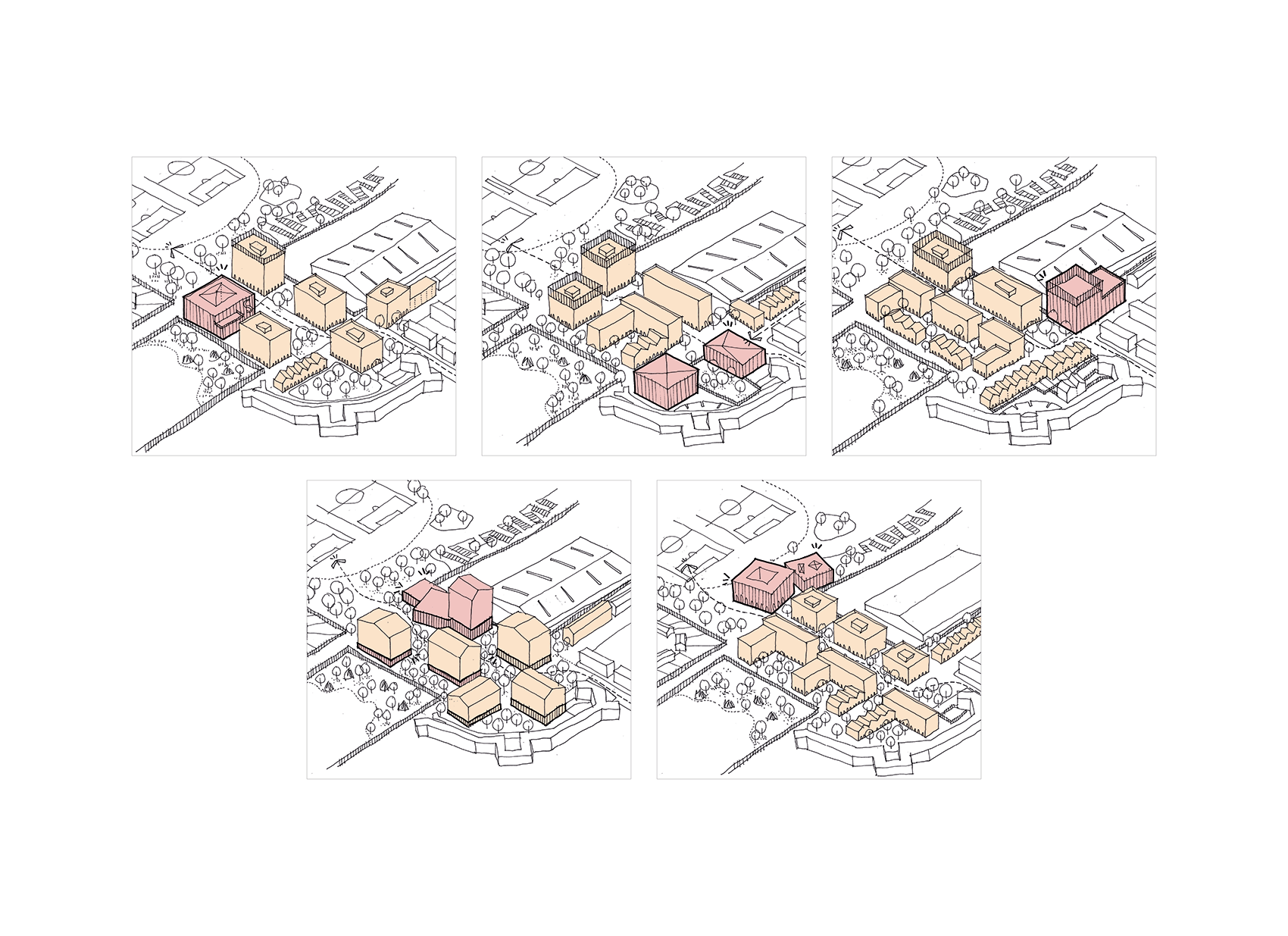
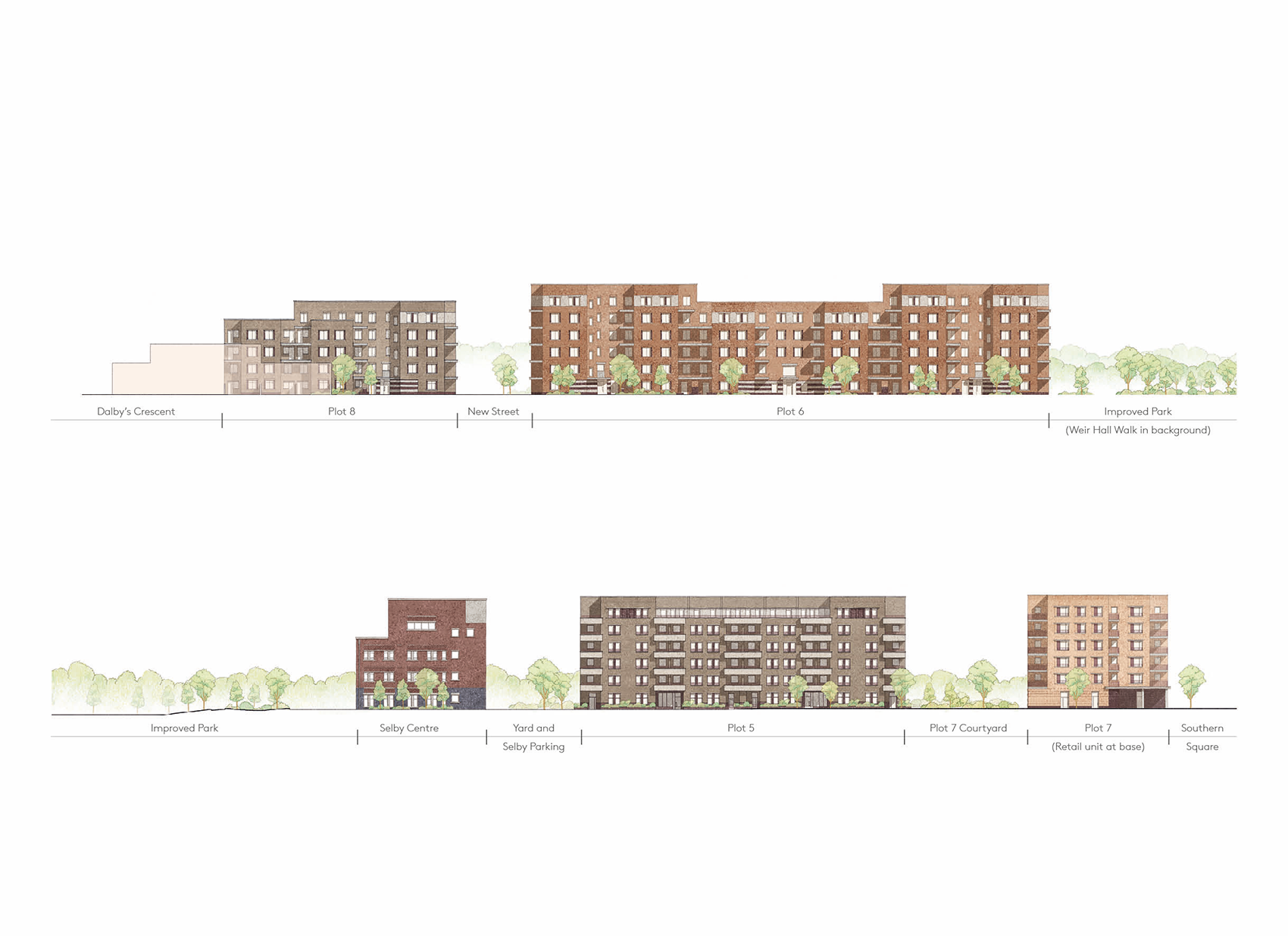
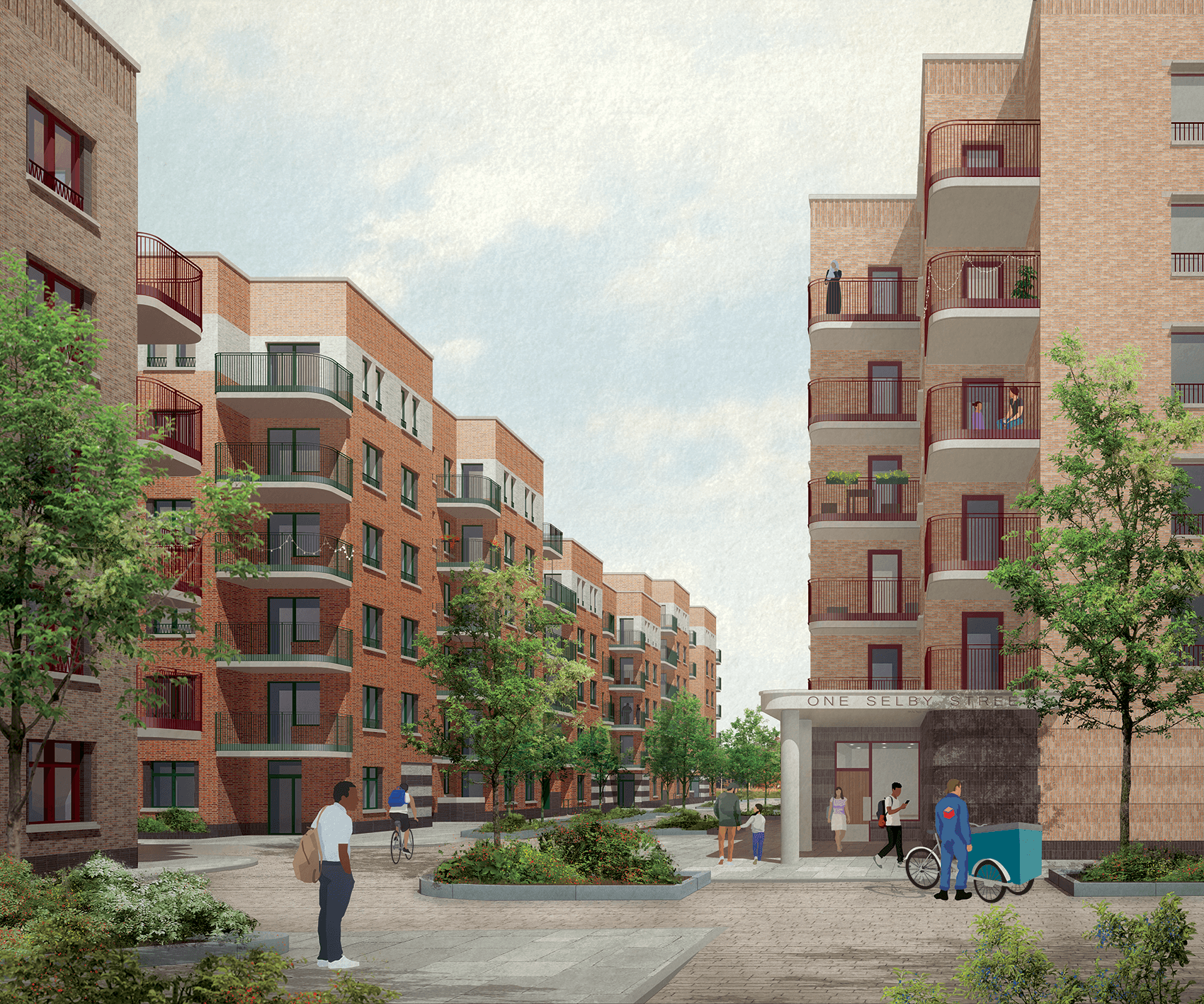
The key urban place-making principle of the masterplan is a traditional street-based approach that creates public spaces and a permanent open route between the park and the residential neighbourhood. Homes are delivered along the new central street in four buildings whose sensitive massing responds to context. Varied heights, articulated balconies and regular openings provide animation and activity, ensuring safety and regular footfall.
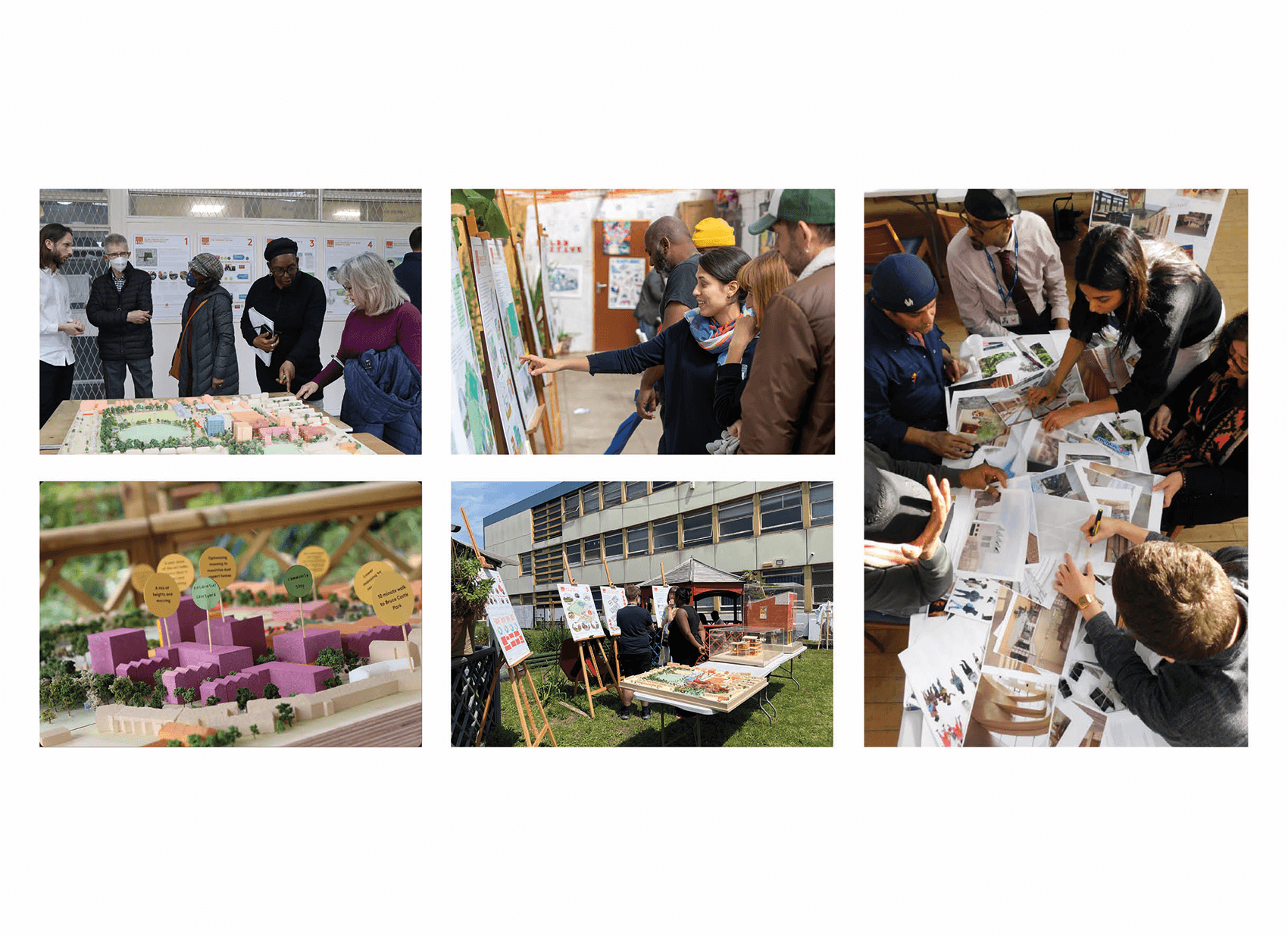
Engagement with The Selby Trust, local businesses and residents has been fundamental in shaping the proposals. Through the careful placement of homes, streets, civic uses and community-focused buildings, the masterplan provides a strongly civic framework that celebrates local identity, supports inclusivity and ties the neighbourhood together.